
Introduction
BREAKING: Ella Langley & Miranda Lambert — The Night Country Music Quietly Passed the Torch
There are nights in music that seem ordinary while they unfold—no grand announcements, no dramatic declarations—yet something in the air feels different. The kind of difference you only recognize once it has already settled into memory. For many who witnessed it, that was the night Ella Langley stood beside Miranda Lambert.
At first glance, it was simply a collaboration: two artists sharing a stage, trading verses, exchanging energy with a captivated audience. But to those who have followed country music long enough to understand its rhythms—not just of melody, but of legacy—it felt like something more profound. It felt like a quiet turning of the page.
Country music has never relied on ceremonies to mark its transitions. There are no official farewells, no formal coronations. Instead, its evolution reveals itself in fleeting moments: a harmony that carries more weight than expected, a glance between artists that speaks of mutual recognition, a performance that lingers long after the final chord fades.
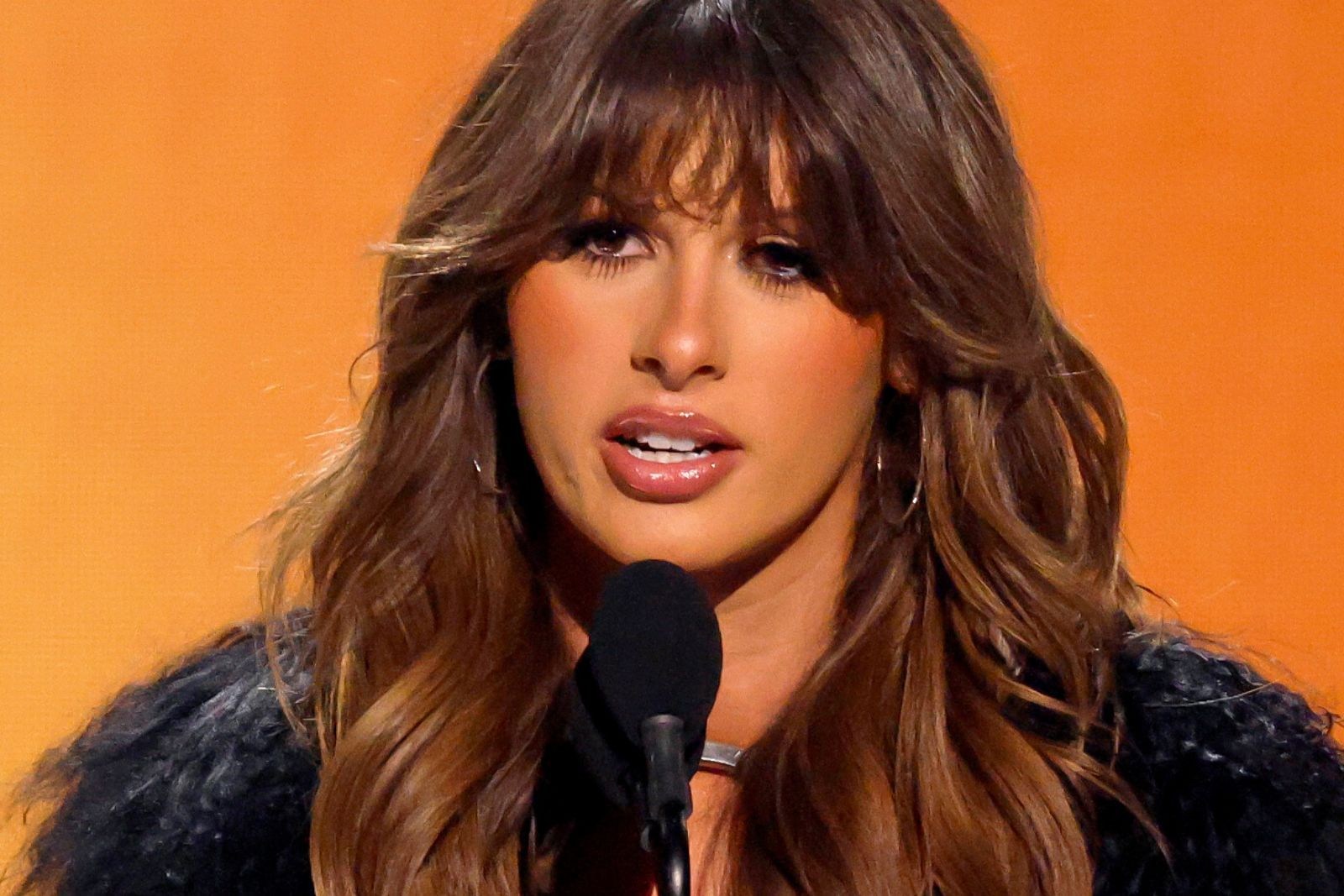
That night, something passed between Lambert and Langley—not visibly, not audibly, but undeniably.
For nearly two decades, Miranda Lambert has stood as one of the defining voices of modern country music. Emerging in an era when female artists were often asked to soften themselves to fit radio expectations, she did precisely the opposite. With a voice edged in Texas grit and a pen unafraid of uncomfortable truths, Lambert built a career rooted in honesty.
Her songs have long carried the weight of real life—heartbreak that refuses to be polished, resilience that comes with scars, and a fierce independence that resonated with listeners who saw themselves in her defiance. She did not merely perform country music; she embodied it. In doing so, she became more than a star—she became a standard.
For many women who followed, Lambert represented possibility. She proved that authenticity could still command attention in an industry often driven by trend and image. Her legacy is not just in awards or chart positions, but in the permission she gave others to be unapologetically themselves.

And then, as time inevitably does, it began to introduce new voices.
Among them, Ella Langley has emerged not as a polished product of the modern machine, but as something refreshingly raw. There is an unmistakable familiarity in her presence—a reminder of an earlier era, when country music leaned more heavily on storytelling than spectacle.
Langley's songs are not afraid of contradiction. They are messy, emotional, and deeply human. There is a rebellious spirit in her work, but it is not rebellion for its own sake; it is the kind born from truth. Younger audiences have gravitated toward her not because she fits a mold, but because she refuses to.
In many ways, her rise echoes the early days of Lambert's own journey.
Which is perhaps why that shared stage felt so significant.
When the two stood side by side, there was no sense of competition, no attempt to overshadow. Instead, there was recognition—an unspoken understanding between two artists shaped by similar instincts, even if separated by time.
Lambert did not step back. Langley did not step forward. They simply stood together.
And yet, for those watching, it felt as though something had gently shifted.
Across conversations that followed—quietly at first, then with growing confidence—a single phrase began to emerge: the torch has been passed.
It is a powerful idea, and perhaps an imperfect one. Because in truth, music does not operate on replacement. One voice does not disappear to make room for another. Instead, it expands, layering new stories atop old ones, creating a richer, more complex tapestry.
Still, the symbolism of that night remains difficult to ignore.
Country music has always been defined by its ability to evolve without forgetting where it came from. From Johnny Cash to Garth Brooks, from Dolly Parton to Shania Twain, each generation has found its voice while echoing those who came before.
What made this moment different was its quietness.
There was no farewell embedded in Lambert's presence, no sense of an ending. Her influence remains as strong as ever, her voice still vital to the genre she helped shape. This was not a goodbye.
It was something far more meaningful.
It was continuity.
Ella Langley does not replace Miranda Lambert any more than Lambert replaced those before her. Instead, she represents the next chapter in a story that has always been written collectively. A story where strength, vulnerability, and truth remain at the center, even as the sound evolves.
And perhaps that is why the moment resonated so deeply, particularly with those who have loved country music long enough to recognize its patterns.
They understood that they were not witnessing a conclusion.
They were witnessing a beginning.
In an era where the genre continues to expand—crossing boundaries, blending influences, reaching audiences far beyond its traditional roots—the presence of artists like Langley offers reassurance. It suggests that even as country music changes, its heart remains intact.
The stories are still honest. The emotions are still real. The voices, though new, carry echoes of those who paved the way.
Whether or not a torch was truly passed that night may remain open to interpretation. But for those who felt it—for those who recognized the quiet gravity of the moment—it hardly matters.
Because sometimes, the most important transitions are the ones that do not ask to be noticed.
They simply happen.
And if you were watching closely, you might have seen it: the future of country music standing beside one of its most enduring voices—not in farewell, but in understanding.
A hand extended. A legacy acknowledged.
And a story, still unfolding.
Video