
Introduction
He Was Asked About Politics — and George Strait's Silence Said More Than a Speech Ever Could
In an age when every microphone seems to double as a ballot box, George Strait has long done something almost unthinkable: he has refused to turn the stage into a campaign rally. That, in itself, is the surprise.
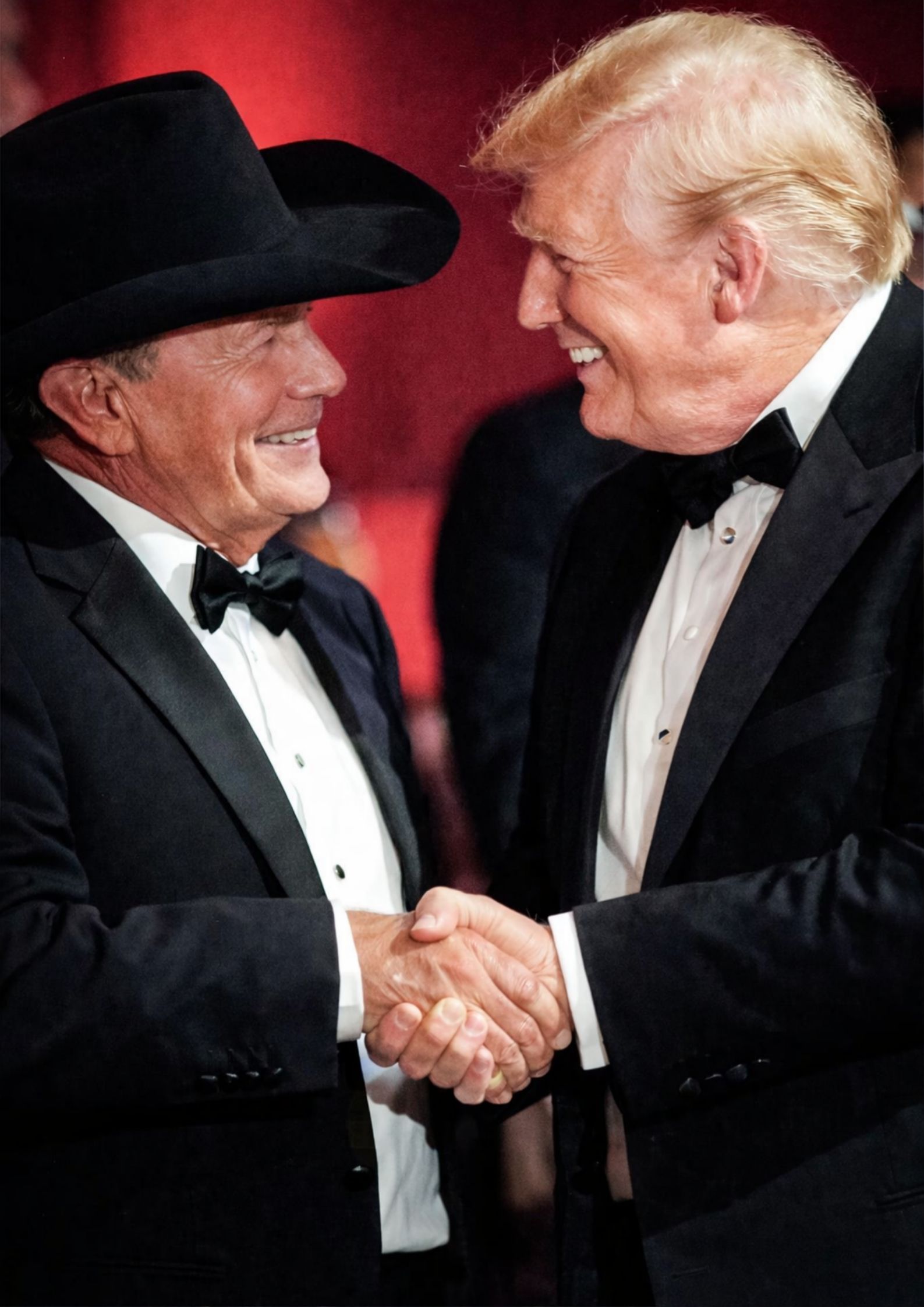
There is no famous clip of Strait pounding the table, no headline-grabbing monologue designed to set cable news on fire by sunrise. In fact, the clearest public record tells a different story. Even when his name drifted near politics—most visibly when Donald Trump announced Strait as one of the 2025 Kennedy Center honorees—reporting emphasized that Strait had said little about his politics. The Associated Press put it plainly: unlike some other public figures in that orbit, Strait's political views remained largely unclear.
And that is precisely what makes him so fascinating.
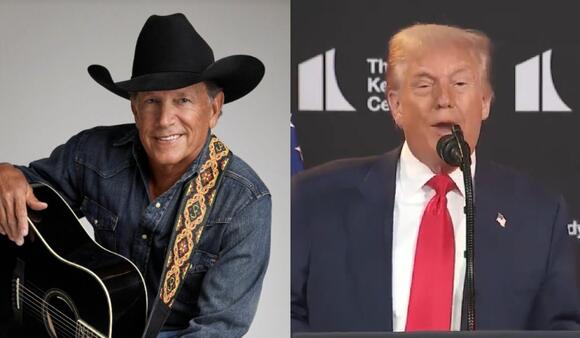
For a certain kind of American reader—especially those who still believe dignity is not weakness—George Strait represents an older code. Not silence born of fear. Silence born of proportion. He has spent decades in public life understanding something many celebrities never learn: not every thought gains wisdom by being amplified. Not every audience comes to be instructed. Some come to remember. Some come to feel less alone. Some come because a song held their hand when life did not.
That is why the idea of Strait being asked about politics carries such quiet electricity. You expect, perhaps, a cautious statement. A polished sentence. A little strategic positioning. But the real George Strait story is more unexpected than that. He does not seem interested in becoming a political symbol at all.
That restraint is not accidental. It fits the man audiences have watched for decades: elusive, measured, sparing with interviews, uninterested in overexposure. Even mainstream profiles of Strait have long noted how rare his interviews are and how carefully he has guarded his private life. Reuters, writing about his 2025 Kennedy Center recognition, treated him not as a political loudspeaker but as a cultural institution—an artist chosen amid a politicized moment, yet not known for public ideological grandstanding.
And maybe that is the deeper twist.
Because in modern America, refusing to perform politics can itself look radical.
We live in a time that rewards instant reaction. Every public figure is expected to declare, denounce, align, explain. The pressure is relentless: if you are famous, you must not only entertain, you must signal. But George Strait has spent a lifetime building a different kind of authority—the kind that does not depend on constant commentary. His power comes from steadiness. From the sense that he belongs not to one news cycle, but to several generations of American memory.
That does not mean he has avoided every brush with public life. Strait has moved in presidential spaces before. He once visited the White House with his family during the George H.W. Bush years, and reports have noted that he performed for Bush at Camp David—an experience Strait reportedly described as one of the great highlights of his career. But even there, what stands out is not partisan theater. It is courtesy. Respect. Ceremony. The old Texas instinct that public office deserves civility even when celebrity culture demands spectacle.

That distinction matters.
A lesser artist might use political attention to reinvent himself as a pundit. Strait never needed that. He already had something harder to win and easier to lose: trust. Not unanimous agreement—trust. The trust of people who may disagree on everything from taxes to foreign policy, but who still hear "Amarillo by Morning" or "The Chair" and feel the room inside them grow quieter. That kind of bond is not built through outrage. It is built through years of showing up without insulting the intelligence of your audience.
So if George Strait was ever asked about politics and gave less than people expected, that was not a failure of nerve. It was a statement of priorities.
He was telling you, in effect, that the work comes first. The song comes first. The shared emotional life of a crowd comes first.
And to many educated American readers—especially those weary of public life becoming one endless shouting match—that may be the most astonishing answer of all. Not because it is dramatic. Because it is disciplined.
George Strait's great surprise is not that he has hidden his politics. It is that he has protected something rarer: the possibility that art can still meet people before ideology does.
In a noisy country, that kind of restraint is not emptiness.
It is character.