
Introduction
"IN THE GHETTO" — The Song That Bound Elvis and Lisa Marie Across Time

Some songs do not simply belong to the year they were released. They continue to breathe through generations, gathering new meanings as life moves forward. In the Ghetto is one of those rare songs.
For many Americans—especially those who came of age in the late 1960s and 1970s—the song remains one of the most haunting and human performances ever recorded by Elvis Presley. But what makes it truly unforgettable is the way it later became something even more personal: a bridge between Elvis and his daughter, Lisa Marie Presley.
Released in 1969, "In the Ghetto" arrived at a pivotal moment in Elvis's career. After years dominated by Hollywood films and lighter soundtrack material, he was returning to music with renewed seriousness following his 1968 comeback special. Recorded during the From Elvis in Memphis sessions, the song marked his first major creative breakthrough in years. It became his first Top 10 hit in the United States in four years, reaching No. 3 on the Billboard Hot 100.
That success, however, tells only part of the story.
Written by Mac Davis, the song was originally titled The Vicious Circle—a title that perfectly captured its message. Rather than offering romance or spectacle, it told the story of a child born into poverty in a Chicago neighborhood, growing up in deprivation, turning toward crime, and ultimately dying, only for the cycle to begin again with another child born into the same conditions.
It was bold material for Elvis.
This was not the glittering showman in a white jumpsuit commanding a Las Vegas stage. This was an artist stepping into something more intimate and socially conscious. His voice does not overpower the lyrics; instead, it carries them with quiet sorrow and measured empathy.
That restraint is precisely what gives the song its lasting emotional force.
For older listeners who remember hearing it for the first time, the record often felt different from anything else on the radio. It spoke not only of hardship but of human dignity. There was compassion in every line.

Then, decades later, the song found new life—and new meaning.
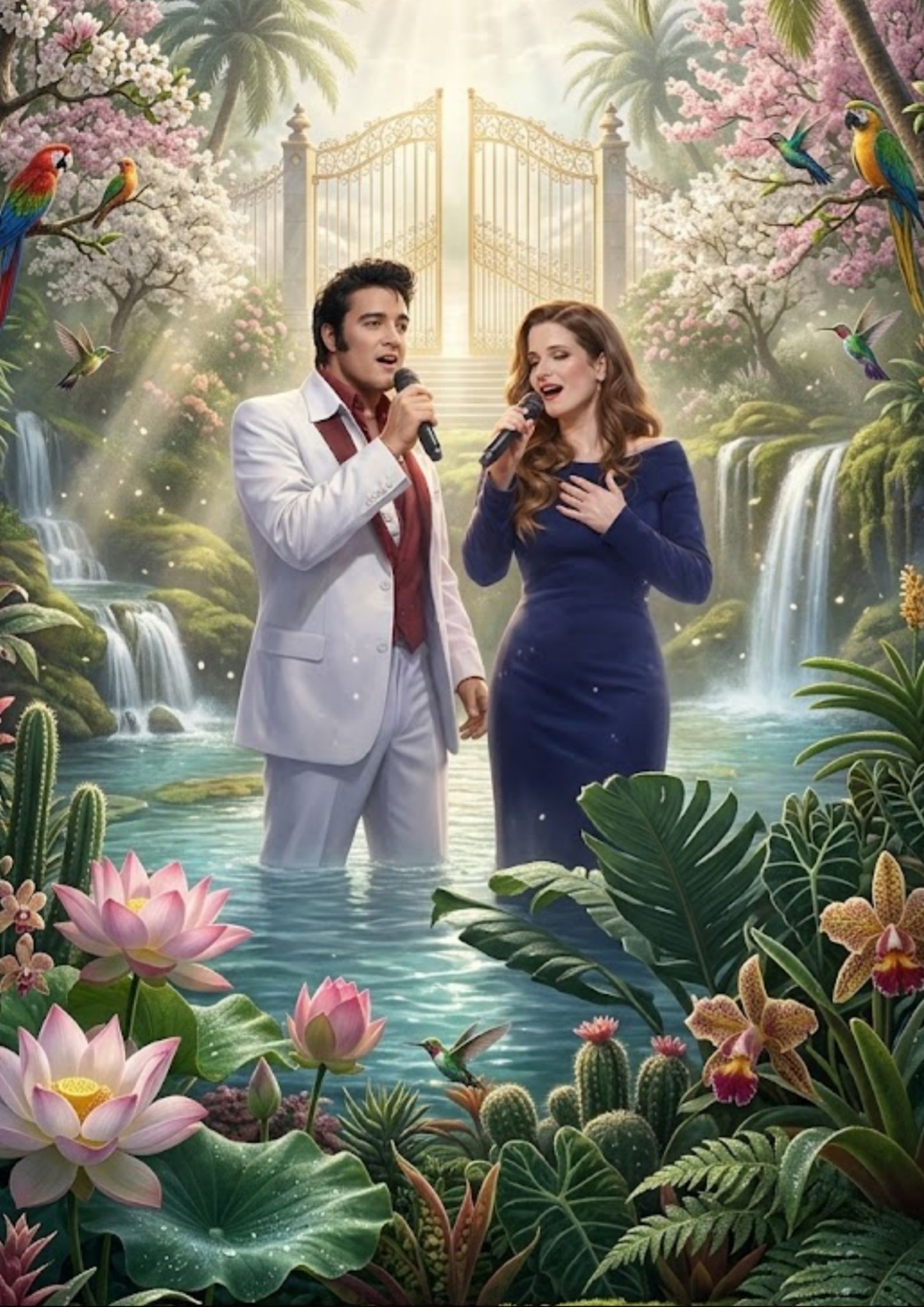
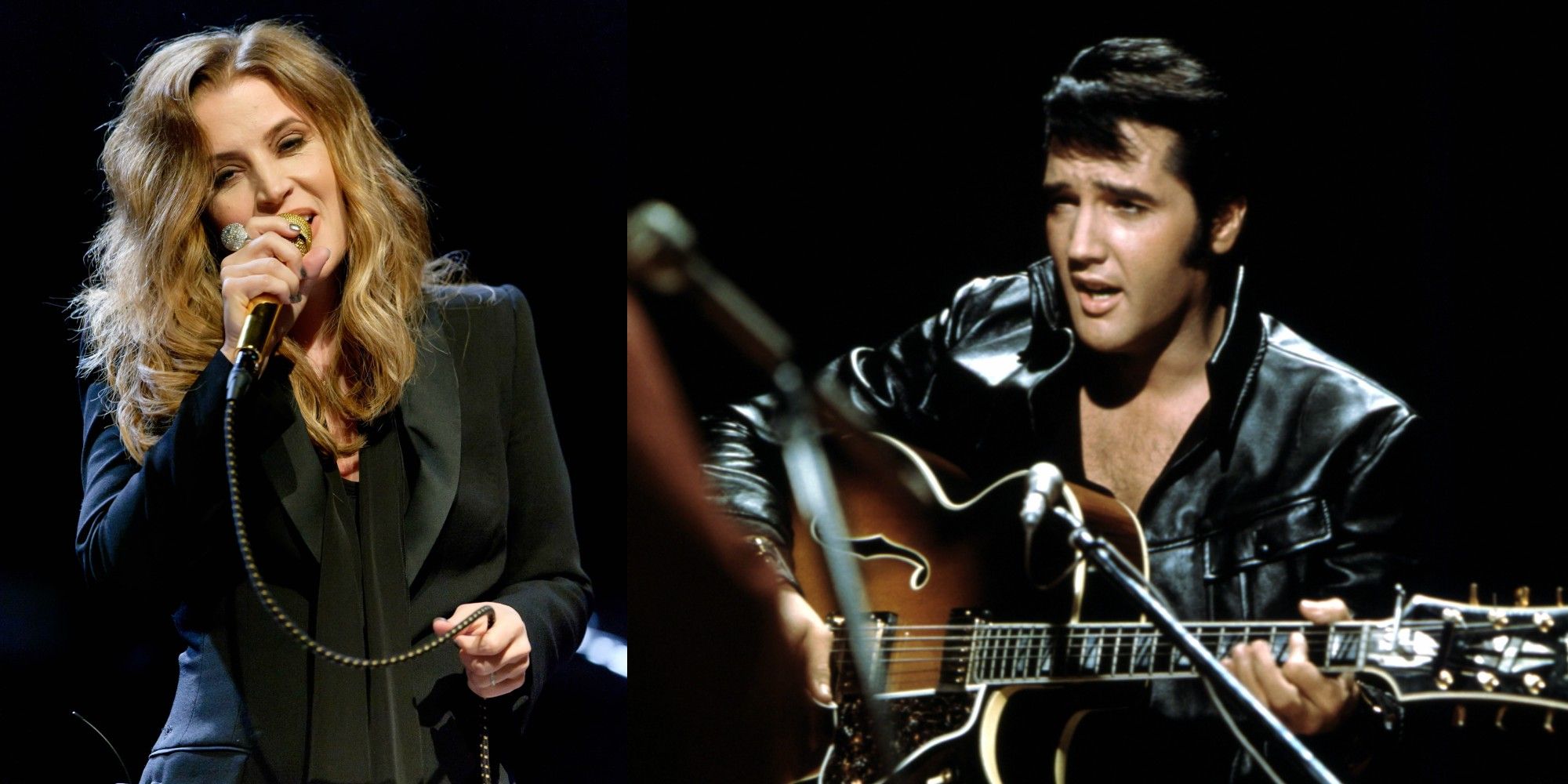
In 2007, on the 30th anniversary of Elvis's passing, Lisa Marie Presley released a virtual duet version of "In the Ghetto," using her father's original vocal track intertwined with her own. The single was issued as a tribute and also served a charitable purpose, with proceeds supporting housing for the homeless in New Orleans.
This was far more than a novelty project.
For listeners who had lived through both Elvis's era and Lisa Marie's life in the public eye, hearing their voices together was profoundly moving.
A father gone for thirty years.
A daughter answering him through song.
The emotional symbolism was impossible to ignore.
The duet transformed the song from social commentary into something even more layered: a family conversation across time.
Elvis's 1969 performance carried urgency—the ache of witnessing suffering and asking society to pay attention.
Lisa Marie's voice brought something different.
There was reflection in it. Maturity. A certain emotional weathering that only life can give.
Rather than trying to imitate her father, she wisely chose contrast over imitation. Her tone was steadier, lower, and more introspective. Together, the two voices created something extraordinary: a dialogue between generations.
For many mature readers, this duet evokes more than admiration—it evokes memory.
By 2007, time had already turned Elvis into an American monument. Lisa Marie, meanwhile, had spent her life navigating the enormous weight of that legacy. Her participation in this duet felt deeply personal, almost like speaking directly into family history.
The lyrics themselves seemed to resonate differently when sung by father and daughter.
The idea of cycles—of hardship repeating, of generations inheriting burdens and hope—suddenly took on a more intimate meaning.
This was no longer just a song about social struggle.
It became a meditation on inheritance, memory, and continuity.
For readers over 60, especially those who remember the original release, the duet often carries a bittersweet emotional power. It reminds us how music can outlive time, grief, and even mortality itself.
A voice recorded in 1969.
A daughter joining him in 2007.
Two lives, separated by decades, meeting in the same song.
That is the quiet miracle of music.
In the end, "In the Ghetto" remains one of the clearest examples of Elvis Presley's artistic depth. It proved he could do far more than entertain—he could move the conscience.
And when Lisa Marie joined him years later, the song became something even greater.
Not just a classic.
A conversation.
A remembrance.
A father's voice carried forward by his daughter.
And for those who still listen with the heart as much as the ear, that connection remains timeless.
If you'd like, I can also write a short highly clickable intro (80–100 words) for American readers 60+ to place above this article and video.